
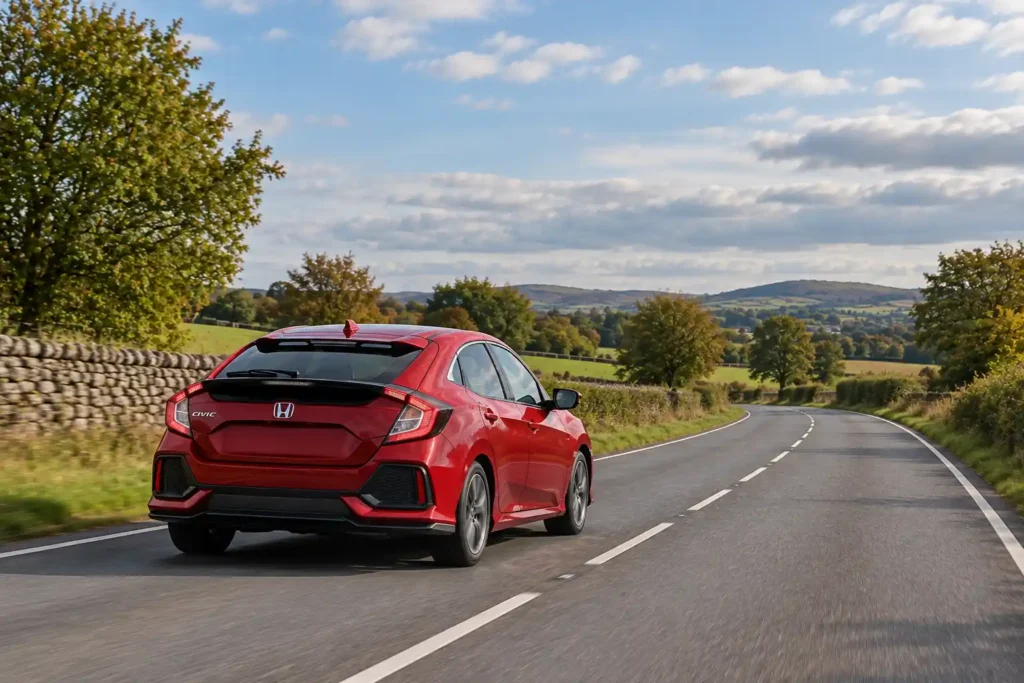
Why a Simple Used Petrol Car Could Be Your Most Reliable Choice
For anyone buying a used car with the intention of keeping it for many years, a relatively simple petrol engine could be one of the safest choices. Not necessarily the fastest, most economical or most technologically advanced, but potentially one of the least troublesome to own.
The reason is straightforward: every additional mechanical component introduces another potential failure point. Modern engines have become increasingly sophisticated in the pursuit of lower emissions, improved fuel economy and better performance. While these developments bring genuine benefits, they can also make cars more complicated and expensive to maintain as they age.
For buyers prioritising long-term reliability over impressive specifications, some of the best choices may therefore be among the more conventional petrol engines developed and refined over decades.
Over a century of petrol-engine development
The petrol engine has a long history. Carl Benz developed one of the first practical petrol-powered cars in 1885, patenting his design in 1886. Although steam-powered vehicles existed earlier, the petrol engine became the dominant technology for passenger cars throughout the twentieth century.
Over the following decades, manufacturers steadily improved engine reliability, efficiency and durability. By the late twentieth century, the conventional four-cylinder petrol engine had become a highly developed piece of engineering.
Why petrol cars can be simpler than modern diesels
One of the main attractions of a conventional petrol car is the absence of several complicated systems commonly found on modern diesel engines.
Diesels have become increasingly sophisticated to meet tightening emissions regulations. Depending on the vehicle, they may use diesel particulate filters (DPFs), exhaust gas recirculation (EGR), turbochargers and selective catalytic reduction systems requiring AdBlue.
These technologies have important environmental and public-health benefits. Unfortunately, they also introduce components that can become expensive to repair or replace.
Petrol engines generally warm up more quickly, reaching optimum operating temperatures. Therefore they tend to be better suited to frequent short journeys. Traditional naturally aspirated petrol engines also avoid the turbocharger and associated components found on most modern diesels.
Modern petrol cars are not entirely free of emissions equipment. Many newer direct-injection petrol engines have petrol particulate filters (GPFs), although their operating characteristics differ from diesel filters.
Nevertheless, a relatively simple petrol engine can avoid several significant sources of complexity associated with modern diesel ownership.
How have petrol engines become more complicated?
During the 2000s, and particularly throughout the 2010s, manufacturers increasingly moved away from larger, naturally aspirated petrol engines towards smaller, more sophisticated alternatives.
The main objectives were to reduce fuel consumption and CO₂ emissions while maintaining acceptable performance, all the while meeting more and more stringent emissions regulations.
Engine displacement gradually reduced, combined with the addition of turbocharging and eventually supercharging to maintain power and torque.
A turbocharger uses energy from the exhaust gases to force additional air into the engine, allowing more fuel to be burned and more power to be produced.
This can deliver impressive performance from a small engine, particularly at lower engine speeds. However, it also introduces additional components operating under demanding conditions.
Turbochargers contain rapidly rotating parts exposed to very high temperatures. Their associated oil supply, cooling systems, pipework and pressure-control mechanisms all require careful engineering and can introduce additional repair costs.
Some manufacturers went further. Early Volkswagen Group TSI engines, for example, sometimes combined a turbocharger with a mechanically driven supercharger. This arrangement delivered strong performance across a wide range of engine speeds, but required considerably more hardware than a conventional naturally aspirated engine.
Each technology serves a purpose, but each also introduces additional components to age and wear, potentially leading to heavy repair bills.
What makes a simple petrol engine attractive?
For someone seeking dependable transport rather than maximum performance, a conventional naturally aspirated petrol engine is a good option.
Naturally aspirated simply means that the engine draws air in without using a turbocharger or supercharger.
A well-designed four-cylinder engine of this type offers several potential advantages.
Firstly, it avoids the additional mechanical and thermal demands associated with forced induction. There is no turbocharger requiring lubrication and cooling, no boost-control system and fewer pressurised air connections.
Secondly, many established designs have benefited from long production runs and continuous development. Common weaknesses may have been identified and addressed over successive generations.
Thirdly, maintenance and repairs can be relatively straightforward. Parts availability is often good, and independent garages are familiar with conventional petrol-engine layouts.
Four-cylinder engines generally provide a useful compromise between performance, economy, refinement and mechanical simplicity.
Naturally aspirated six-cylinder engines can also be very durable and often offer excellent smoothness. However, their greater size, additional components and typically higher fuel consumption can make them more expensive to run.
The trade-off: reliability rather than impressive specifications
The main disadvantage of a conventional naturally aspirated petrol engine is that it may feel relatively ordinary to drive.
Compared with a modern small turbocharged engine, it may produce less pulling power at low engine speeds and require more revs when accelerating or climbing hills. Some people might miss the pleasant surge from the turbocharger as power delivery is likely to be more linear.
Its official fuel economy may also be less impressive.
However, these disadvantages need to be considered alongside the potential cost of long-term ownership.
A saving of a few miles per gallon can quickly become insignificant if a more sophisticated engine develops an expensive fault.
What else to consider?
In this article we mainly looked at the reliability of the engine. We all know that a car contains many other complex and movable parts besides the engine!
When assessing a used car aged over 10 years, there are many other factors to consider such as corrosion, suspension health and electronics, to name a few.
These will be explored in other articles.
The take home:
A used car with an average sized simple petrol engine will on average be more reliable over the long term than a heavily downsized engine with forced induction (ie turbocharging).
Of course there will be simple petrol engines with weaknesses that have played out over the years , so always check reliability information on your engine in question before making your purchase.