
An Introduction to Used Hybrid Cars: Mild, Full and Plug-in Hybrids Explained
Hybrid cars have become increasingly common in the UK used-car market, offering an alternative to conventional petrol and diesel vehicles without requiring drivers to switch fully to electric power.
They can be a great option for those wanting to eliminate any EV range anxiety but who still enjoy the smooth running and quiet character of electric power. However, the term ‘hybrid’ covers several different technologies, and understanding the differences is important when choosing a used car.
From mild hybrids, which provide electrical assistance to a conventional engine, to plug-in hybrids capable of travelling considerable distances on electric power alone, each technology has different advantages and compromises.
As the UK and Europe gradually switch over the electrification of cars, it is likely that hybrid cars will continue to feature in both the new and used car markets; therefore it is worth knowing some key information about them.
What is a hybrid car and how does it work?
A hybrid car combines a conventional internal combustion engine (ICE), usually petrol, with an electric motor and battery. The two power sources work together to move the car, with the aim of improving efficiency and reducing fuel consumption.
Depending on the type of hybrid, the electric motor can assist the engine during acceleration, recover energy when slowing down or power the car independently for short distances.
There are three main types of hybrid:
- Mild hybrid (MHEV)
- Full or self-charging hybrid (HEV)
- Plug-in hybrid (PHEV)
The main differences are how much electric-only driving is possible and whether the battery needs to be plugged in.
Not interested in Hybrids? Return to the Used Car Homepage below to read articles about Petrol and Diesel cars:
What is a mild hybrid (MHEV)?
Mild hybrids are the simplest form of hybrid technology. They use a relatively small battery and electric motor, commonly operating on a 48-volt electrical system in modern cars, to assist the conventional engine.
Unlike other types of hybrid, a mild hybrid cannot normally propel the car using electric power alone. Instead, the electric motor provides additional assistance during acceleration, helps the engine restart smoothly after stopping and can improve the efficiency of the stop-start system.
The potential benefits include smoother power delivery and modest improvements in fuel economy, although the extent varies between manufacturers and models.
Mild-hybrid technology is increasingly common in premium used cars and can be combined with either petrol or diesel engines.
For buyers, a mild hybrid is best thought of as a conventional petrol or diesel car with some additional electrical assistance, rather than an electric car with a petrol engine.
What is a full or self-charging hybrid (HEV)?
Full hybrids take electrification a step further. They have a larger battery and more powerful electric motor, allowing the car to travel short distances using electric power alone.
Unlike a plug-in hybrid, a full hybrid does not need to be connected to an external charger. Its battery is recharged through the engine and a process called regenerative braking. This captures some of the energy normally lost as heat when slowing down and converts it into electricity, which is stored in the battery for later use.
Toyota was instrumental in bringing this technology to the mainstream with the launch of the original Prius in Japan in 1997. It was the world’s first mass-produced hybrid passenger car, helping establish hybrid technology as a practical alternative to conventional engines. The Prius arrived in the UK in 2000 and is now in its 5th generation.
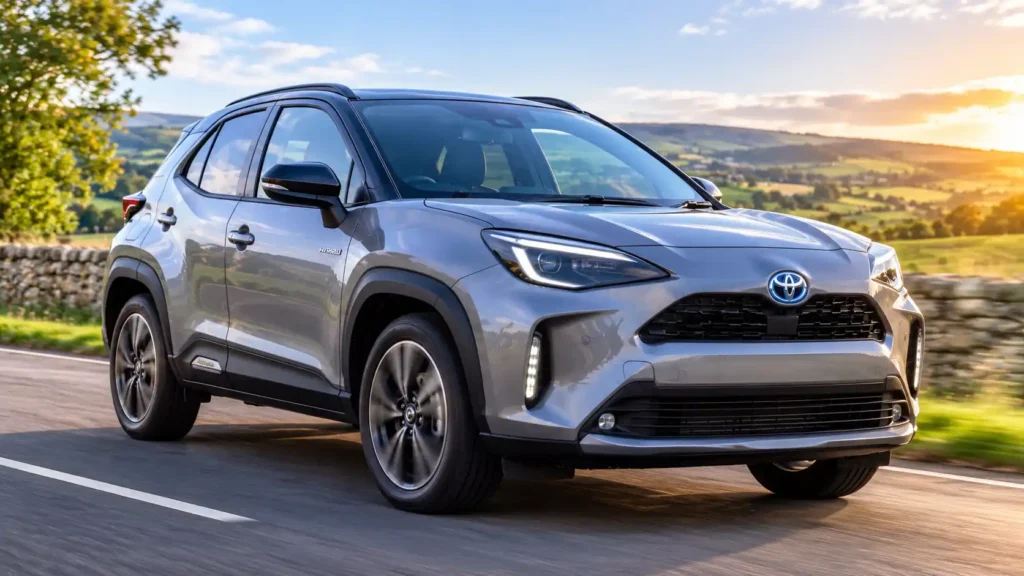
Although the current generation Prius is not a common sight in the UK, the self charging hybrid technology refined by Toyota over the years can be found in many current Toyota and Lexus models. Several other manufacturers have developed their own full hybrid technology such as Honda, Kia, Hyundai.
Full hybrids are hugely popular with taxi drivers, which is due to their proven track record as reliable cars with moderate running costs and ability to run with minimal downtime.
For used-car buyers, full hybrids can be particularly attractive for urban and mixed driving, where frequent slowing down and acceleration provide opportunities to recover energy and make use of electric power.
What is a plug-in hybrid (PHEV)?
Plug-in hybrids combine a conventional engine with a significantly larger battery, which can be recharged using an external electricity supply.
This allows them to travel considerably further on electric power alone than a conventional full hybrid. Early examples often offered electric ranges of around 10–25 miles, while newer models can manage considerably more.
Popular used examples include the Mitsubishi Outlander PHEV, BMW 330e, Volvo T8 models and Mercedes C300e.
The main attraction is the ability to complete shorter journeys, such as a daily commute, using electricity while retaining a petrol engine for longer trips.
When regularly charged and used within their electric range, PHEVs can achieve very low fuel consumption. This also made them particularly attractive to company-car drivers, as their relatively low official CO₂ emissions and electric range historically provided favourable Benefit-in-Kind (BiK) tax treatment.
However, the larger battery adds weight and complexity compared with a conventional hybrid. Once depleted, fuel consumption can increase substantially, particularly during motorway driving or longer journeys.
Official fuel economy figures can also be misleading because they assume a degree of electric driving that often does not reflect actual ownership. Someone who rarely charges their PHEV could end up carrying around a heavy battery without making much use of its benefits.
Regular access to home or workplace charging is essential when buying a used plug-in hybrid.
Looking for a full EV? Read more at the EV Homepage below:
Which type of hybrid should I choose?
This depends on whether you have access to home charging and what your typical driving pattern is. Use the table below as a guide when considering your choice:
| Consideration | Mild hybrid | Full hybrid | Plug-in hybrid |
| Electric-only driving | No | Yes, limited | Yes, longer range |
| External charging | No | No | Yes |
| Urban efficiency | Some improvement | Often very good | Excellent when charged |
| Long-distance suitability | Generally good | Generally good | Depends on charging and use |
| Battery size | Small | Moderate | Large |
| Additional complexity | Relatively limited | More substantial | Highest of the three |
For someone who mainly drives around town, a full hybrid can be particularly appealing. It offers the opportunity to use electric power without the inconvenience of plugging in, while retaining the flexibility of a petrol engine.
Mild hybrids are worth considering if you want a conventional petrol or diesel car with some additional electrical assistance. They do not offer the same potential fuel savings as a full hybrid, but can be a straightforward alternative when choosing between otherwise similar models.
Plug-in hybrids make most sense for drivers who can charge regularly and whose daily journeys fall within the car’s electric range. Without regular charging, the additional weight and complexity can outweigh the benefits.