
An introduction to diesel
Why and how did diesel become so popular?
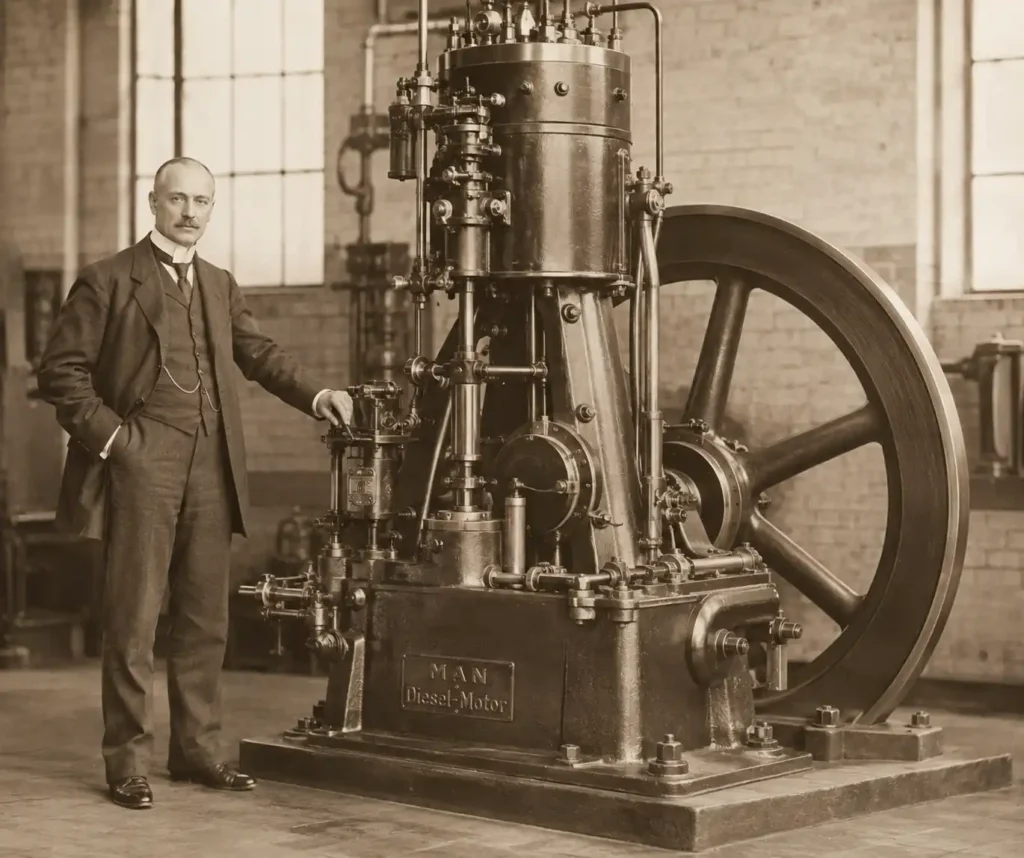
Diesel engines have been around since the late 19th century, but they took much longer to become commonplace in passenger cars. Early diesel cars were generally noisy, slow and agricultural compared with their petrol equivalents.
That began to change during the 1980s. Turbocharging, electronic fuel injection and eventually common-rail injection transformed diesel engines, making them quieter, more powerful and considerably more refined.
In the 1990s, diesel cars began to surge in popularity. Government taxation increasingly favoured cars with lower official CO₂ emissions, while company-car taxation became increasingly linked to CO₂. Because diesels generally used less fuel and produced less CO₂ than equivalent petrol engines, they became financially attractive to both businesses and private buyers. The introduction of CO₂-based company-car taxation in 2002 was particularly influential.
The change was dramatic. Only around 6% of new UK cars were diesel in 1990. By 2010, diesel accounted for more than half of new-car registrations, and in 2016 diesel still represented 47.7% of the new-car market.
The rise wasn’t simply about tax. Diesel engines were becoming genuinely good cars to drive, while rising fuel prices made their superior fuel economy increasingly attractive. By the mid-2000s, the diesel had moved from being primarily a high-mileage specialist to a mainstream choice for family cars, hatchbacks and executive cars.
How does a diesel engine work?
The fundamental difference between petrol and diesel engines is how the fuel is ignited.
A petrol engine uses a spark plug to ignite a mixture of fuel and air. A diesel engine doesn’t need a spark. Instead, it compresses air to a much higher pressure, making it extremely hot. Diesel fuel is then injected into this hot compressed air, where it ignites.
This high compression ratio helps give diesel engines their characteristic strong low-speed torque, which makes them well suited to motorway driving, towing and carrying heavy loads.
Modern diesels also use turbochargers to force more air into the engine. Combined with sophisticated fuel injection, this allowed relatively small engines to produce impressive power while maintaining excellent fuel economy.
From smoky old diesels to modern technology
The early diesel cars many British motorists remember were a very different proposition from today’s cars. They could be noisy, slow to warm up and, particularly when cold or under hard acceleration, could produce visible clouds of black or grey smoke.
Many of us will remember following an older diesel car and seeing a cloud of smoke appear behind it after starting or accelerating. This visible soot was one of the defining characteristics of older diesel engines.
Modern diesels are a very different story. With precise electronic fuel injection, turbocharging and sophisticated emissions-control systems, a properly maintained modern diesel should produce little or no visible smoke under normal driving conditions.
Without multiple emissions controls systems, diesel engines naturally produce large amounts of nitrogen oxides (NOx) and particulate matter.
As emissions legislation became progressively stricter, manufacturers added increasingly sophisticated systems to control them.
- EGR (exhaust gas recirculation) reduces NOx by recirculating some exhaust gas back into the engine.
- DPF (diesel particulate filter) traps soot particles and periodically burns them off during a regeneration cycle.
- AdBlue/SCR systems on many newer diesels reduce NOx in the exhaust using a urea-based fluid.
The above systems are fantastically effective at cleaning up diesel emissions. But they are complex pieces of equipment and with complexity carries the risk of failure, which can give you an expensive repair bill.
The strengths and weaknesses of diesel
The advantages:
- Excellent fuel economy, particularly on longer journeys
- Strong low-speed torque
- Relaxed motorway cruising
- Often well suited to high annual mileage
- Modern engines can be quiet and remarkably refined
- Some diesel engines are capable of very high mileages when properly maintained
The drawbacks:
- More complicated emissions equipment
- DPFs can cause problems if a car is repeatedly used for short journeys
- EGR systems can become dirty or fail
- AdBlue and associated systems add further components that can require maintenance
- Some modern diesel repairs can be expensive
Why the peak diesel era has passed
The diesel world was thrown into darkness in 2015 with the Volkswagen emissions scandal, when regulators discovered software designed to manipulate emissions testing in certain diesel vehicles. The scandal badly damaged public confidence in diesel and intensified scrutiny of real-world emissions.
At the same time, governments increasingly moved towards reducing transport emissions and encouraging electric vehicles. UK policy is moving towards zero-emission new cars, with the government’s current framework targeting the end of new petrol and diesel car sales by 2030, followed by the requirement for all new cars and vans to be zero-emission at the tailpipe from 2035, subject to the evolving rules and exemptions.
Diesel is declining – but it is far from gone
In 2025, diesel accounted for roughly 5.1% of new UK car registrations. By July 2026, its share had fallen further to 4.2%. For comparison, battery-electric cars accounted for 27.5% of July 2026 registrations.
The latest government figures show that at the end of 2025 there were around 10.1 million licensed diesel cars on UK roads, representing approximately 29.4% of cars on the road.
These figures tell us that fewer and fewer new diesel cars are being sold, but they still account for nearly a third of the cars on the roads in the UK.
This suggests that drivers are keeping and using their diesel cars and likely will do into the 2030s and beyond. There is still a thriving used diesel car market to enjoy and exploit. Millions remain in use, and depreciation has made some excellent diesel cars surprisingly affordable on the used market.
So diesel is clearly in decline – but it is a long way from disappearing from the used-car market.
For a driver covering high mileages or using a car for long journeys, a good diesel can still make a great deal of sense.
Read on to find out what you need to know about used diesel cars.