Do I need an extended warranty for a used electric car?
Used electric cars can look like excellent value. Models that cost tens of thousands of pounds when new have depreciated substantially, bringing relatively modern EVs within reach of buyers who might otherwise choose a petrol or diesel car.
But buying a cheaper used EV comes with some unique risks: what happens if an expensive electrical or drivetrain component fails?
It is true that EVs generally need less routine mechanical maintenance than conventional cars. However, serious faults can occur, especially as mileage increases. These faults can lead to substantial repair bill. Furthermore, the specialist equipment, expertise and parts needed to fix the faut are not always immediately available and are not available at every garage.
For a used EV outside its original warranty, we would strongly recommend having comprehensive protection against major component failures. The scope of the cover and policy exclusions need reviewing carefully, as many third party warranty providers will purposefully exclude expensive EV components. In most cases, a Manufacturer extended warranty will be your best bet.
Why can EV repairs be so expensive?
An electric car has fewer moving mechanical parts than a conventional petrol or diesel car. There is no combustion engine, conventional multi-speed gearbox, exhaust system or engine oil to maintain. Routine servicing can therefore be simpler.
However, EV repair and diagnosis is a comparatively young specialist field. Although the technology is well established, the independent repair network, availability of replacement components and expertise in repairing some complex faults are still developing.
A fault may require high-voltage diagnostic equipment, a technician with specialist training and access to manufacturer-specific software. Some components can be repaired individually, while others may be supplied only as expensive assemblies. If a suitable specialist is unavailable locally, transport and additional diagnostic costs can add to the bill.
This is particularly important for older EVs that have depreciated sharply. The cost of a repair does not necessarily fall in proportion to the car’s market value.
Which EV components can be expensive to repair?
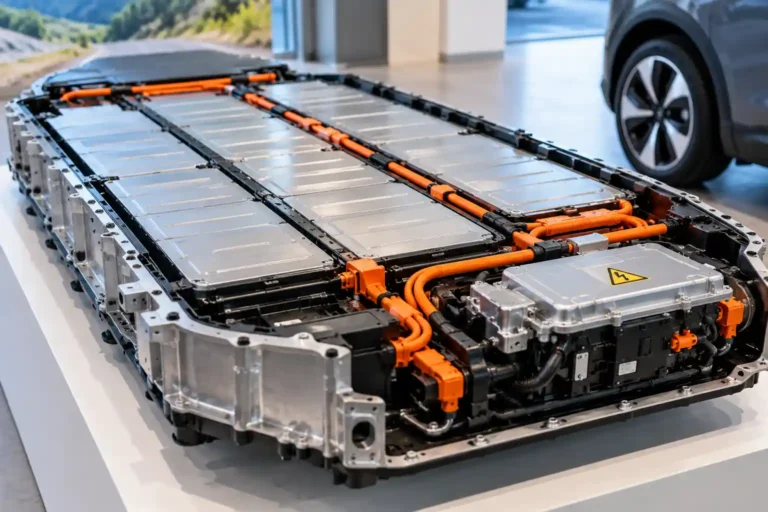
The main battery often attracts the most headlines because it is the single most expensive part of an EV, but there are many components to consider:
- High-voltage battery: The large battery that powers the motor. Battery degradation means a gradual loss of capacity and range; it is not the same as a sudden battery failure. Individual modules or other components may sometimes be repaired without replacing the complete pack.
- Electric motor and reduction gearbox: The motor drives the wheels through a reduction gearbox, which provides the appropriate gearing. Faults in either can require expensive specialist work.
- Power electronics: The inverter converts the battery’s direct current (DC) into alternating current (AC) for the motor. The onboard charger manages charging from an AC supply, while the DC-DC converter supplies the car’s lower-voltage electrical systems.
- Software and electronic control systems: Software faults, control-module failures and charging-system communication problems can prevent a car from operating or charging correctly. Some issues need only an update or reset; others require more involved diagnosis or hardware replacement.
- Heating and air conditioning: Electric heating, heat pumps and associated components can be costly to repair, particularly where specialist parts are required.
How much does it cost to repair a used EV?
The following figures are very broad estimates only. As with any repair, premium brands will command a higher price.
| Repair | Rough cost |
| Complete high-voltage battery replacement | £5,000–£15,000+ |
| Battery module repair | From around £1,500 |
| Electric motor or integrated drive unit | £3,600–£7,200 |
| Onboard charger replacement | Around £1,200–£2,500 |
| Reduction gearbox or integrated motor/gearbox unit | £1500 – £5000+ |
You can see from the above that repair costs for some of the complex EV drivetrain components vary hugely. Note that the above estimates do not include diagnostic charges, which would add further to the bill.
What warranty cover does a used EV already have?
Before buying additional cover, establish exactly what protection remains.
Many EVs have separate warranties for the vehicle, high-voltage battery and the drivetrain components. Some also specify cover for the electric motor, inverter and charging equipment.
For example:
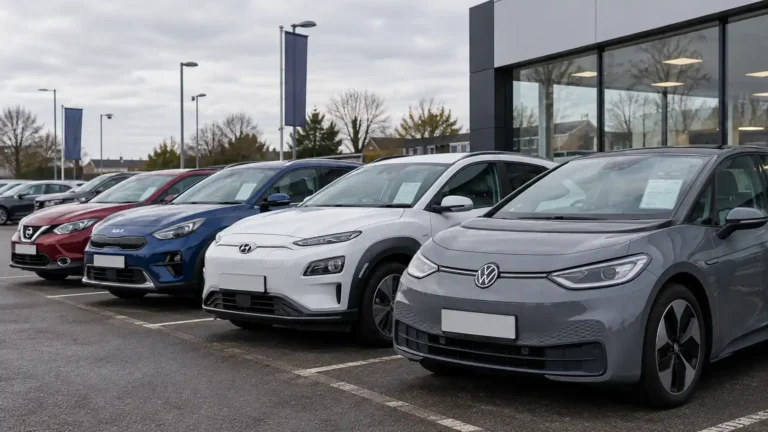
- Volkswagen ID.3: Volkswagen specifies an eight-year or 100,000-mile high-voltage battery warranty, including protection against capacity falling below 70% under its terms. Its standard vehicle warranty is shorter.
- Kia e-Niro: Kia’s warranty provides seven years or 100,000 miles of general vehicle cover, with separate battery provisions. Its published EV coverage includes the motor, gear drive unit, power control unit and onboard charger. Exact terms depend on the vehicle and registration date.
- Hyundai Kona Electric: Hyundai specifies an eight-year or 100,000-mile high-voltage battery warranty for relevant models, with a 70% capacity threshold under its terms.
Remember that battery degradation is not automatically covered: the manufacturer’s threshold must be breached, and the other warranty conditions must be satisfied. A battery warranty also does not necessarily protect against faults in the motor, inverter or charging hardware.
Are you worried about battery degradation in a used EV? Read more in our article below:
Is extended warranty cover worth buying for a used EV?
Yes! Our recommendation is to prioritise comprehensive protection against major electrical and drivetrain failures once the original manufacturer’s cover expires.
When assessing an extended warranty, check that it explicitly covers:
- The high-voltage battery, including what constitutes a covered failure.
- The electric motor and reduction gearbox.
- The inverter and other power electronics.
- The onboard charger and relevant charging components.
- Electronic control modules and software-related faults, where applicable.
Also check the exclusions, claim limits, excess, diagnostic fees and labour allowances. Some policies exclude gradual battery degradation, pre-existing faults or particular electronic components. A policy may technically cover the motor but cap each claim at an amount insufficient to pay for its replacement.
Are you undecided about EVs? Read the article below for help:
What kind of extended warranty is best?
Where available and affordable, we would generally favour a manufacturer’s extended warranty or an approved-used programme backed by the manufacturer.
A manufacturer-backed scheme is more likely to provide access to authorised technicians, manufacturer-specific diagnostic equipment and established parts supply chains. It may also offer clearer routes for dealing with complex faults.
If the car is still within its original warranty, check whether an extension is available before that cover expires.
Finally, remember that if you buy a used car from a dealer, your statutory consumer rights remain separate from any warranty. Under the Consumer Rights Act 2015, a car must be of satisfactory quality, fit for purpose and as described, taking account of factors such as its age, mileage and price. A warranty does not remove those rights.
For a used EV, the sensible starting point is therefore to establish the remaining manufacturer cover, then look for a credible extension that protects the expensive components most likely to leave you facing an unaffordable repair bill.