
Do I need to worry about EV Battery degradation?
Battery degradation is one of the biggest concerns people have when considering a used electric car. Batteries do gradually lose capacity as they age, but increasing amounts of real-world data suggest that the deterioration of modern EV batteries is generally much less dramatic than many buyers fear.
What does battery degradation actually mean?
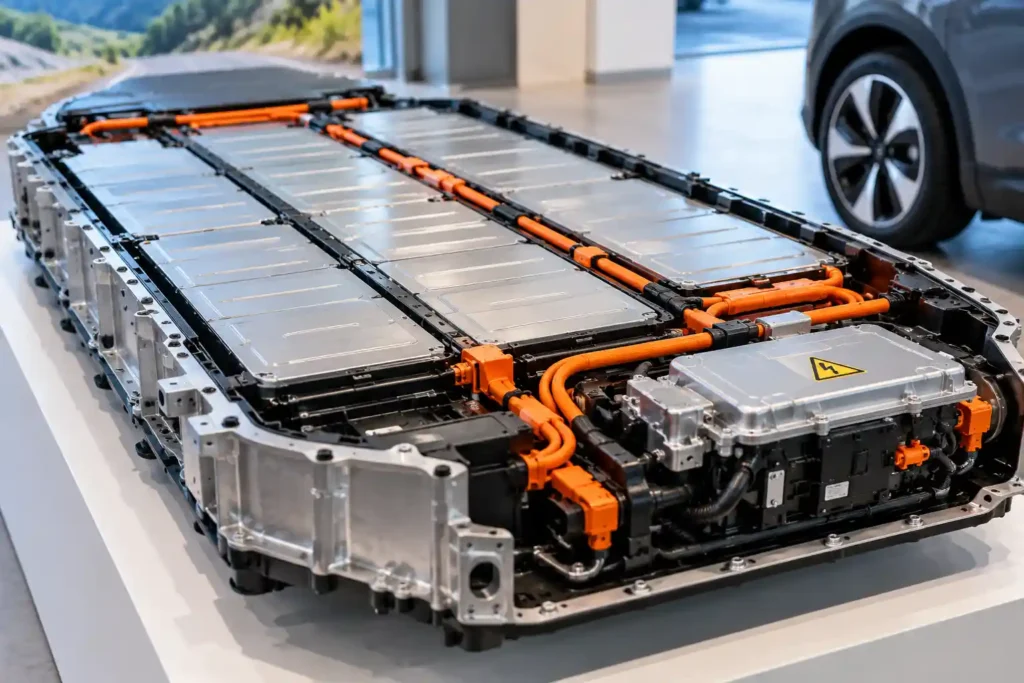
Most electric cars use lithium-ion batteries. Rather than one enormous battery, the battery pack contains many individual cells which work together to store electricity.
Battery capacity is simply the amount of energy the battery can store, normally expressed in kilowatt-hours (kWh). As the battery ages, this capacity gradually reduces.
You may also come across the term State of Health, or SoH. This expresses the remaining condition of a battery compared with when it was new. In simple terms, a battery with around 90% of its original usable capacity remaining has lost roughly 10% of that capacity.
The principle isn’t very different from the battery in a mobile phone. The important difference is that an EV has a much larger and more sophisticated Battery Management System (BMS), which monitors and controls the battery. Most modern EVs also use thermal management to keep the battery within a suitable temperature range.
All batteries gradually lose capacity
Some degradation is unavoidable. It occurs both through the simple passage of time, known as calendar ageing, and through charging and using the battery, known as cycle ageing.
This doesn’t normally mean that an EV battery suddenly stops working. Instead, the amount of energy it can hold gradually reduces, which ultimately means less driving range.
Degradation generally follows a gradual pattern, but it isn’t identical between individual cars. Battery chemistry, temperature, charging behaviour, mileage and how the vehicle has been used can all influence the eventual result.
How quickly do EV batteries actually degrade?
This is where real-world evidence is becoming particularly useful.
A 2024 study by German consultancy P3 analysed its own EV fleet before incorporating independent battery measurements from more than 7,000 vehicles, some with as much as 300,000 km of use.
Its data showed a relatively faster initial decline in battery health, followed by slower deterioration. Average State of Health was around 95% at approximately 30,000 km and around 90% at 100,000 km (about 62,000 miles). After this, the average decline became considerably shallower.
More recent UK evidence is also encouraging. Generational’s 2025 Battery Performance Index analysed more than 8,000 battery-health assessments. Average battery health across the vehicles tested was 95.15%, while eight-to-nine-year-old vehicles had a median capacity of around 85%. Vehicles with more than 100,000 miles frequently returned battery-health figures between 88% and 95%. Importantly, however, there was variation between individual cars.
Individual long-term tests provide some interesting examples too. ADAC has been running a Volkswagen ID.3 since 2021. After just over 220,000 km – around 137,000 miles – independent testing measured its battery at 89% State of Health. This is only one vehicle and shouldn’t be taken as representative of every ID.3, but it demonstrates what a modern EV battery can achieve with substantial use.
What causes battery degradation?
Inside a lithium-ion battery, gradual chemical changes occur both as the battery ages and as it is charged and discharged. There is no way of completely eliminating this.
Temperature and charging behaviour can influence how quickly it happens. Spending prolonged periods at very high or very low states of charge can increase battery stress, while battery design and thermal management also matter.
Frequent high-power rapid charging can have an effect too. Rapid DC charging puts high electrical currents through the battery and can generate more heat than slower AC charging. Modern cars use battery cooling and sophisticated software to manage this, but frequent high-power charging can still increase degradation.
Geotab’s 2026 analysis of more than 22,700 EVs found average degradation of about 2.3% per year across its dataset. Vehicles relying heavily on DC charging above 100 kW showed degradation rates of up to around 3% per year, compared with roughly 1.5% for vehicles primarily using AC or lower-power charging.
This doesn’t mean you should avoid rapid chargers. They are there to be used, particularly on long journeys. The evidence is more relevant to cars that have spent a large proportion of their lives being rapid charged than to an owner occasionally stopping at a motorway charger.
Are modern EV batteries better than early ones?
Yes!
Battery technology has developed considerably since the first generation of mass-market electric cars.
Manufacturers have improved battery chemistry, Battery Management Systems and temperature control, while experience gained from millions of EVs has improved understanding of how batteries should be protected during charging and use.
This doesn’t mean degradation has been eliminated. It means that we now have much more real-world evidence showing that modern batteries can retain a large proportion of their original capacity after substantial mileage.
Should degradation worry you when buying a used EV?
It is something to check rather than something to fear.
Some capacity loss is entirely normal in an older EV, just as mechanical wear is normal in an older petrol or diesel car. A five-year-old electric car shouldn’t necessarily be rejected simply because its battery no longer has exactly the same capacity it had when it left the factory.
When buying used, knowing the battery’s State of Health can therefore be more useful than looking at mileage alone. UK data already show considerable variation between vehicles, particularly as they get older.
It is also important to separate normal degradation from an actual battery fault. A failed cell or module, unusually rapid deterioration or another high-voltage battery problem is different from the gradual loss of capacity discussed here. We’ll cover battery failures and the potential repair implications separately.
Battery degradation is normal and worth checking when buying used, but current real-world evidence suggests that gradual capacity loss in modern EVs is generally much less dramatic than many buyers fear.