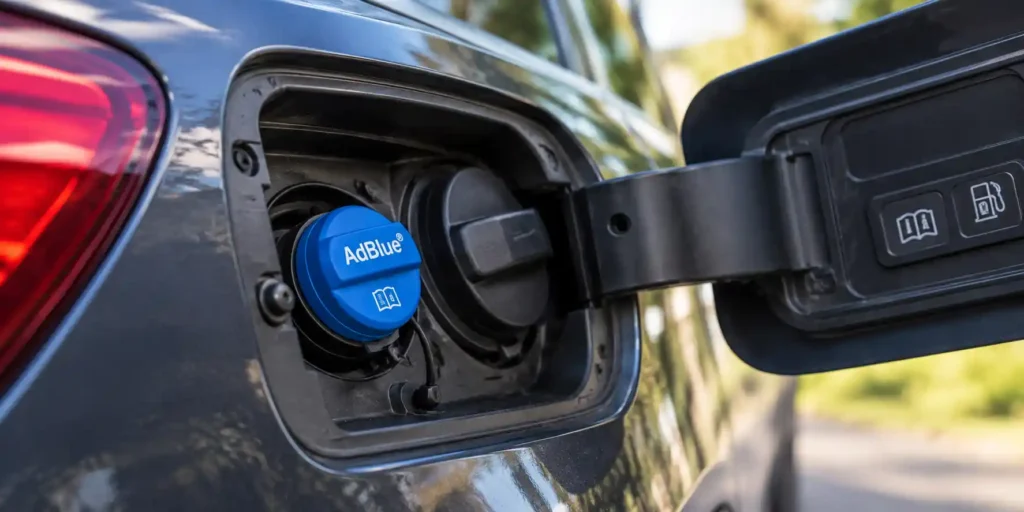
What is AdBlue and why it could leave you with a big bill
AdBlue is a fluid used by many modern diesel cars to reduce harmful exhaust emissions.
The complication is the system needed to make it work. This can include a separate tank, pump, heater, injector, sensors and an SCR (Selective Catalytic Reduction) catalyst. A failure in any of these can trigger an emissions warning and, on some cars, a countdown after which the engine will not restart.
That is how a system based around inexpensive fluid can sometimes produce a four-figure repair bill.
What is AdBlue?
AdBlue is the European trade name for a type of diesel exhaust fluid, or DEF. It consists of 32.5% high-purity urea and 67.5% purified water and is manufactured to the ISO 22241 standard.
It is not a fuel additive and should never be put into the diesel tank. AdBlue has its own reservoir and is injected into the car’s exhaust.
Its purpose is to reduce nitrogen oxides, or NOx, produced by the diesel engine. It does this as part of the car’s Selective Catalytic Reduction (SCR) system.
The difference between the two terms is useful to understand:
AdBlue is the fluid. SCR is the emissions-control system that uses it.
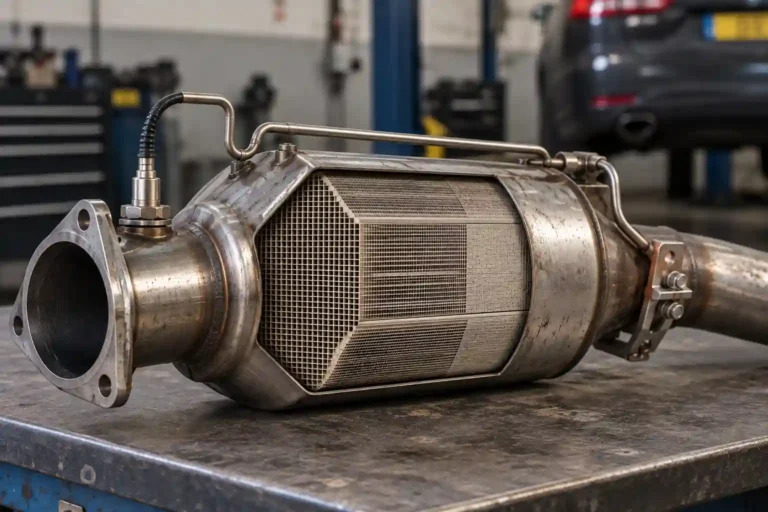
AdBlue is injected into the hot exhaust, where it ultimately provides ammonia. The exhaust then passes through the SCR catalyst – a physical component in the exhaust system where ammonia reacts with NOx, converting much of it into nitrogen and water.
So the AdBlue itself is consumed and periodically needs refilling. The SCR catalyst stays on the car, much like a conventional catalytic converter.
There are many complex emissions systems on modern diesel cars and it is worth reminding ourselves of the different systems:
AdBlue is separate from the other emissions equipment found on modern diesels. A DPF primarily captures particulate matter or soot, while EGR – exhaust gas recirculation – helps reduce the formation of NOx inside the engine. SCR deals with NOx in the exhaust.
So the AdBlue system is different to the DPF system, which is another potentially problematic emissions control system. You can read more about DPF systems in our article below:
When did cars start using AdBlue?
SCR technology was used in commercial diesel vehicles before becoming widespread in passenger cars.
For UK motorists, the important period was the introduction of Euro 6. These emissions standards substantially tightened the permitted NOx emissions from diesel cars, applying to new type approvals from September 2014 and, broadly, new registrations from September 2015.
SCR became one of the main technologies manufacturers used to achieve these lower NOx emissions.
Not every diesel registered after 2015 necessarily has AdBlue. Manufacturers used different emissions-control systems, particularly during the earlier Euro 6 period. As a general rule, however, AdBlue becomes increasingly common on newer diesels.
How does the system work?
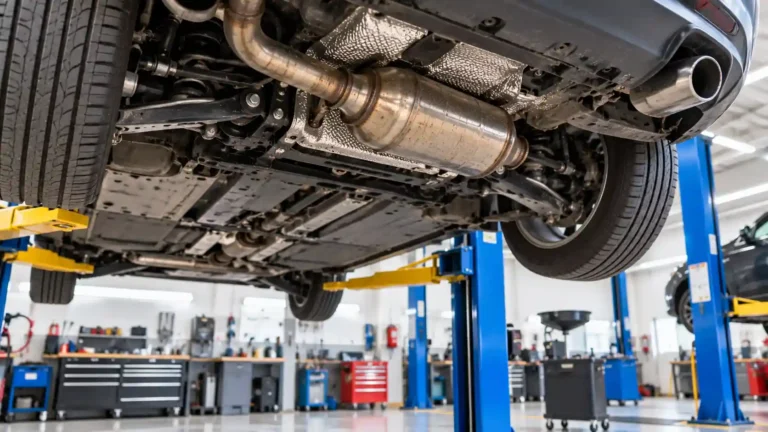
A simplified AdBlue/SCR system looks like this:
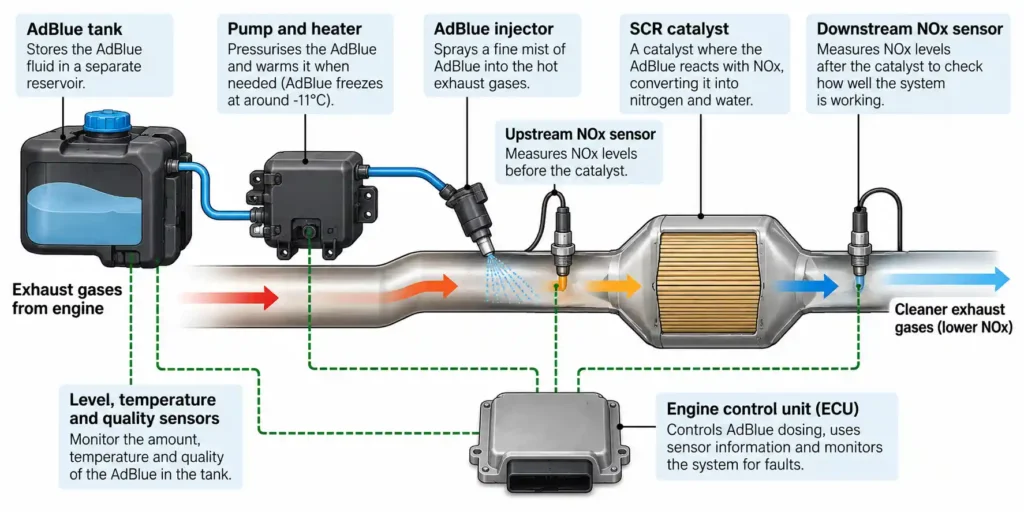
The fluid is stored in a separate tank. A pump sends it to a dosing injector, which sprays a controlled quantity into the exhaust.
The resulting ammonia and exhaust gases then pass through the SCR catalyst, where the NOx-reducing reactions take place.
NOx sensors can measure the exhaust before and after the catalyst. The car’s electronics use this information to control the system and check that NOx is actually being reduced.
There may also be sensors for AdBlue level, temperature and quality. A heater is needed because AdBlue freezes at around -11°C. Freezing does not normally damage correctly specified AdBlue; it can be used again once thawed.
The fluid is therefore the simplest part of the system. The complexity comes from the equipment needed to store, inject and monitor it.
What goes wrong with AdBlue systems?
- Running out of fluid
Running out of AdBlue is the simplest problem. The car should provide warnings well before the tank is empty, giving you plenty of time to refill it.
- Tank, pump and injector faults
The system needs to supply AdBlue at the correct pressure and inject the right quantity. A failed pump can therefore stop the system working even with a full tank.
The heating system can also fail. On some cars the heater, pump and sensors are incorporated into a larger tank or supply module. A relatively small component failure can therefore require replacement of a much more expensive assembly.
AdBlue can also form crystalline deposits. These can occur around the dosing system and potentially restrict the injector – hence garages sometimes describing an AdBlue injector as “crystallised”.
- Sensor faults
The car needs to know whether the SCR system is actually reducing emissions.
NOx sensors play an important role in this. They operate in a harsh environment of high temperatures, moisture and vibration and can eventually fail.
A faulty NOx sensor can therefore trigger an SCR or AdBlue warning even though there is nothing wrong with the fluid in the tank.
Level, temperature and fluid-quality sensors can also develop faults. Simply adding more AdBlue isn’t necessarily the answer to an AdBlue warning.
- Fluid quality and contamination
AdBlue should meet the correct ISO specification and must not be contaminated.
Storage also matters. Prolonged exposure to excessive heat can shorten its storage life, while contamination can interfere with the SCR system. For most motorists the solution is straightforward: buy correctly specified AdBlue from a reputable source and keep any leftover fluid sealed and stored sensibly.
- SCR efficiency faults
Sometimes the car detects that the SCR system isn’t reducing NOx as effectively as expected.
That doesn’t automatically mean the expensive SCR catalyst has failed. Poor dosing, a restricted injector or inaccurate NOx sensor can potentially produce an SCR efficiency fault as well.
Correct diagnosis matters before expensive components are replaced.
Why you can’t ignore AdBlue warnings
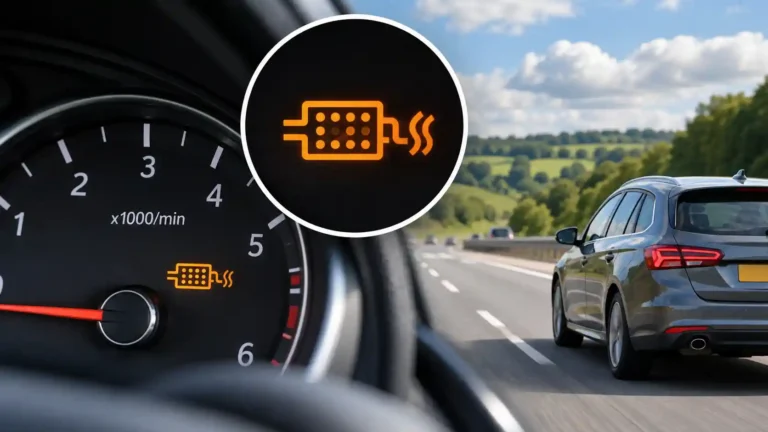
If the car identifies a serious fault with the AdBlue/SCR system, it can eventually start a countdown clock telling you the number of engine starts remaining until the engine will be locked out. Yes, that is correct, a car with a fully functioning engine can refuse to start if it thinks the AdBlue system is failing! This is the dreaded AdBlue countdown that people sometimes speak of.
Importantly, this doesn’t only happen when you run out of AdBlue. Problems with the dosing system, incorrect fluid or faults that prevent the car from confirming that its NOx emissions are being properly controlled can also trigger a no-restart warning.
Why can an AdBlue fault become expensive?
The frustrating thing is that AdBlue itself is cheap. A 10-litre container might cost around £15–£20, but the equipment needed to store, inject and monitor it can be much more expensive.
A relatively simple clean of a crystallised injector might cost around £100–£200, while replacing an AdBlue injector or NOx sensor can run into several hundred pounds. A failed pump or dosing module can potentially cost £500–£1,000 or more to rectify.
Costs can become particularly high when components are integrated. On some cars the pump, heater or sensors form part of a larger AdBlue tank assembly rather than being easily replaceable individually. Replacing one of these assemblies can push the bill towards £1,000–£1,500 or more. An SCR catalyst itself can also potentially result in a four-figure bill.
Correct diagnosis is therefore important to minimise repair costs where you can.